
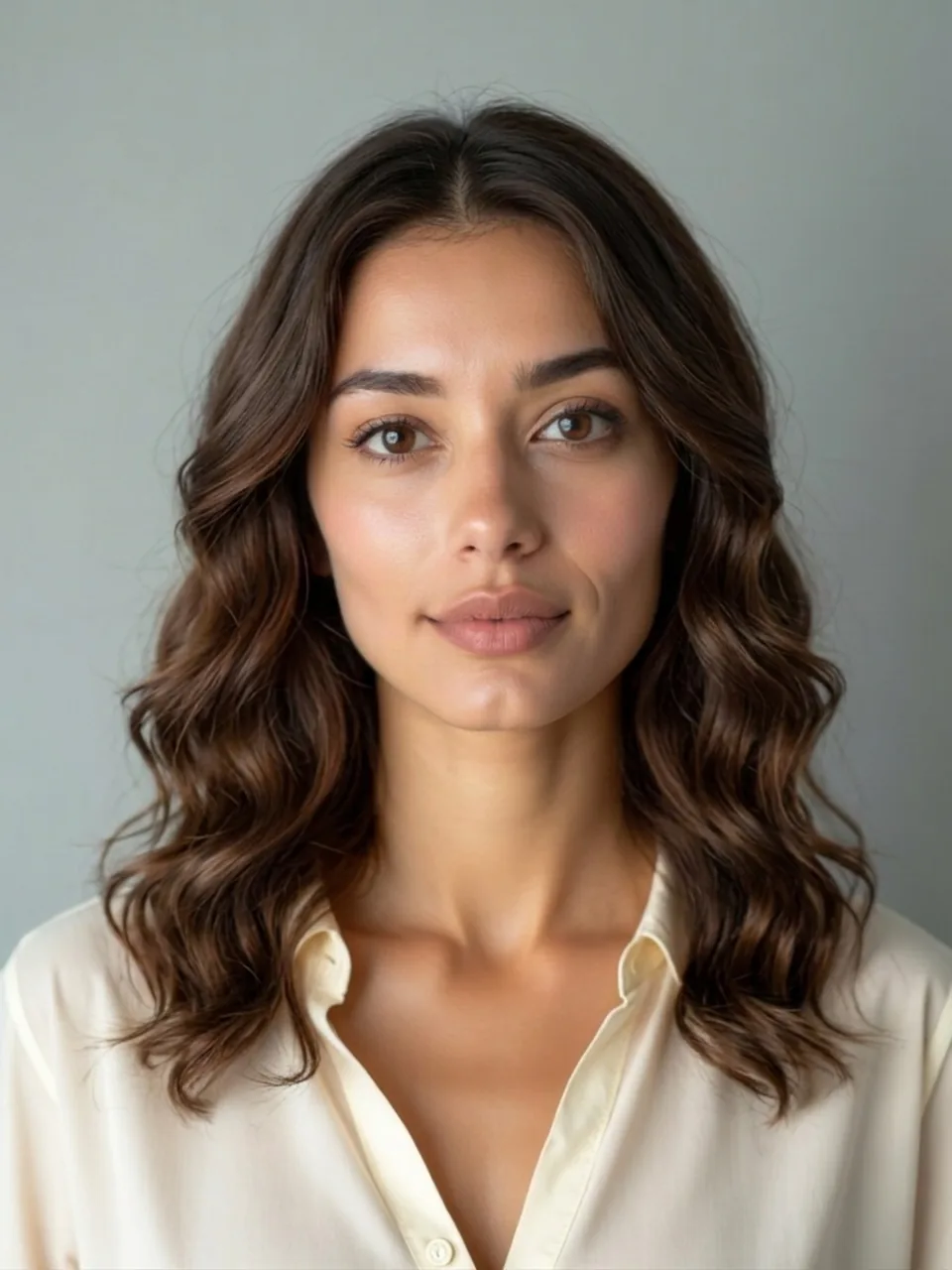
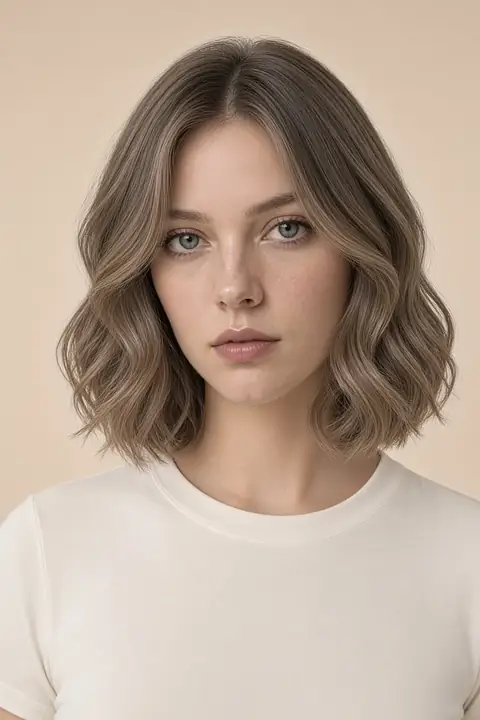
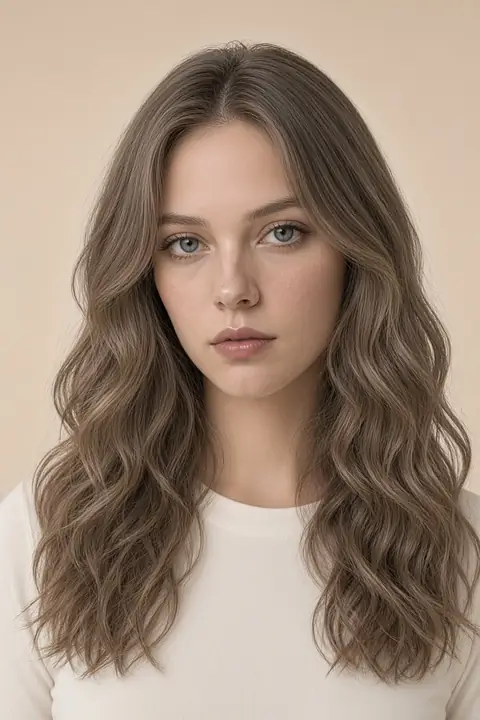
 Curly hair filter
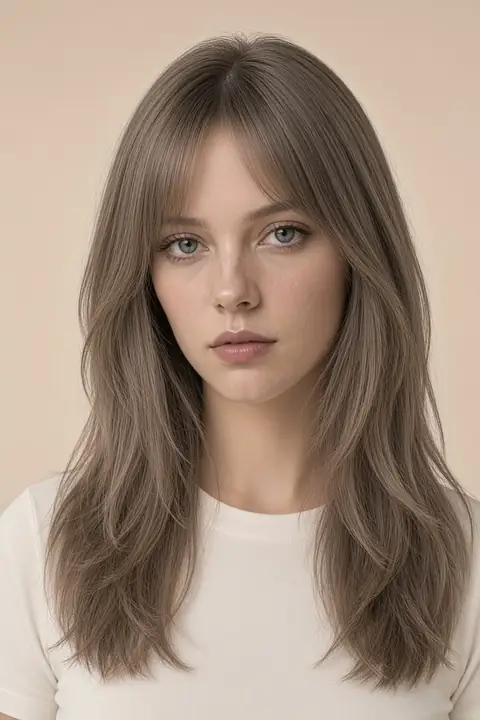 Layered hair
 Side part
 Pixie cut filter
A perm is a chemical decision that repeats an S down a section of hair. The wave is often more even than curls you inherited, because a rod does not care about the cowlick halfway down the strand. People asking what would I look like with a perm usually want that evenness: a pattern, not a cloud. This page tries to draw the pattern. It does not run the curly-hair control, and it does not pretend to be a salon ticket.
A prompt, because there is no perm setting
The edit asks for regular roller-set waves, and it asks to keep the face, the clothes, the background, and the approximate length. It is not the curly-hair control.
Roller-set means a repeating width: S shapes that start and end near the same height. Genetic curl is allowed to be messy. A perm picture that looks like that mess has drifted toward the Curly hair filter. If our wave looks like loose curls, the prompt under-specified the roller. Compare the two pages. Neither is a slider on the other.
Length is approximate on purpose. A real perm can spring up a little. It should not turn a bob into waist-length hair or cut a long style into a wavy pixie. When the length category jumps, ignore the waves in that file. If you need the short version, start from a photo already near that length, or read the result beside the Bob haircut.
What "even" looks like when it is fake
Uniform does not mean plastic. A believable roller pattern still has a few waves that refuse to match, especially near a cowlick or behind the ear. The failure mode is the opposite of the curly page's frizz halo. Here the model draws identical chrome ripples, each the same width, with a highlight running along every crest like a cartoon. Hair does not polish itself into corrugated metal. If you could trace one S and stamp it across the head, the regularity is the generator, not the chemistry.
The face is the part worth protecting while you look at those waves. We ask for it to stay, along with skin tone. A perm does not narrow a jaw or lift a brow. Color should stay in the range of the photo. Warm waves painted onto black hair, or a surprise blonde, means the edit started redesigning. This is not a color page.
Roots matter. A roller set can leave the first inch calmer than the ends, especially if the hair is fine and the rod never got close to the scalp. The model sometimes starts the S at the hairline in a perfect arc, which lifts the root into a bump no roller would leave without a lot of teasing. That bump changes how tall the forehead looks. If the forehead "shrunk," check for a wave that begins too high and stands off the scalp.
Photos and the chemical thing this is not
Photograph the hair dry and worn the way you actually leave the house. A wet comb-down shows length and hides the wave your hair already has, so the model piles a second pattern on top of a slick shape. A bun hides the ends, which is where a perm shows its rod size. Shoulders in frame. No scarf compressing the outline into a tube the model will then ripple.
You will not get rod sizes, processing time, or a warning about breakage. Nothing here is a formula. Hair that is already bleached, or already curly, reacts to a real perm in ways a prompt cannot smell. If your hair is damaged, the picture of shiny even waves is the least honest thing on the screen. Use it to see the pattern on your face. Do not use it to decide that your hair can take the chemicals.
How to use the perm filter names each control. Faces you do not want to publish can be blocked locally with Face blur.
Look at the repeat of the wave, not the shine. A perm here is a roller-set S, the same bend showing up at a regular interval. Genetic curl, which is the curly hair filter, clumps and shrinks and does not keep that interval. If you cannot find the S, and the hair is a cloud of different sizes, this run missed and handed you the other shape. The lie is evenness your density cannot support. Fine hair should still show scalp at the part. An S that fills the part and hides the scalp invented volume. Roots should still point the way they did this morning. A result that moves the part so the wave photographs better changed the cut. Length stays. An S that also chops the ends to the chin did two jobs. Color stays. A warmer tone baked in so the wave would read is a dye. Compare one section from the ear to the end with the photo you uploaded, at the same zoom, before you trust the outline.
 Hair color
 Facial hair
 Photo privacy
 Headshots
 Clothes
 Enhance
 Background
 Remove