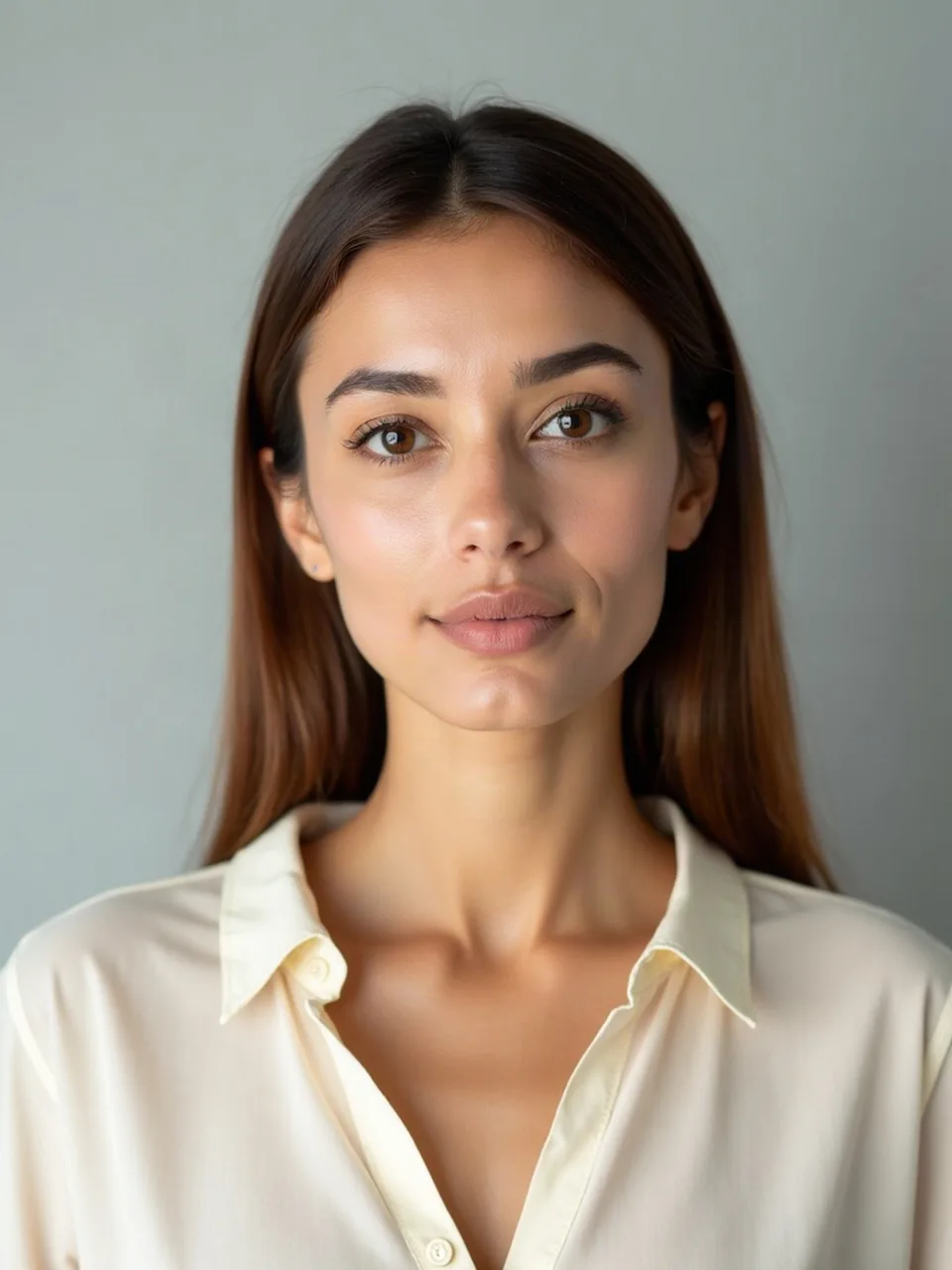
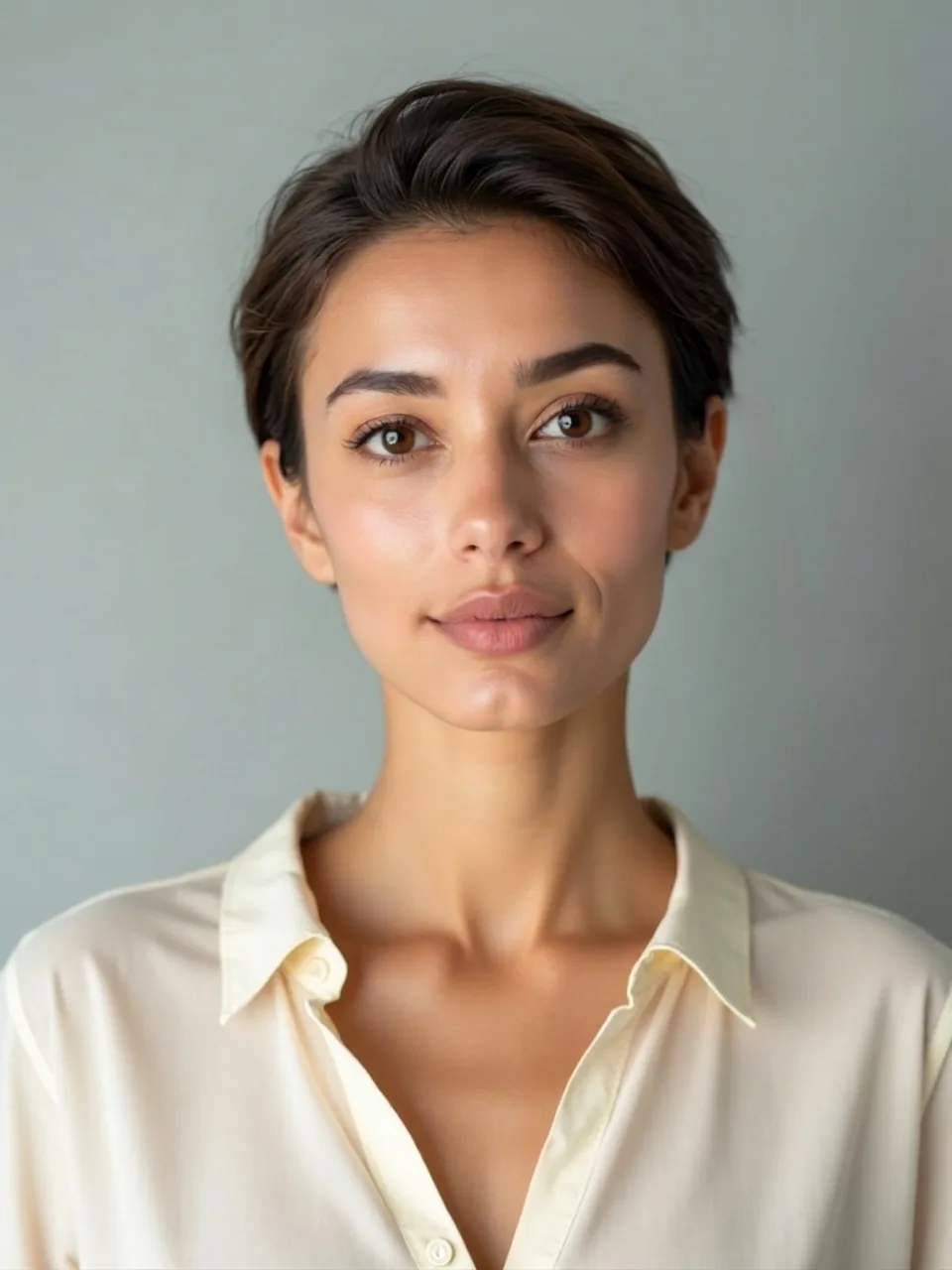
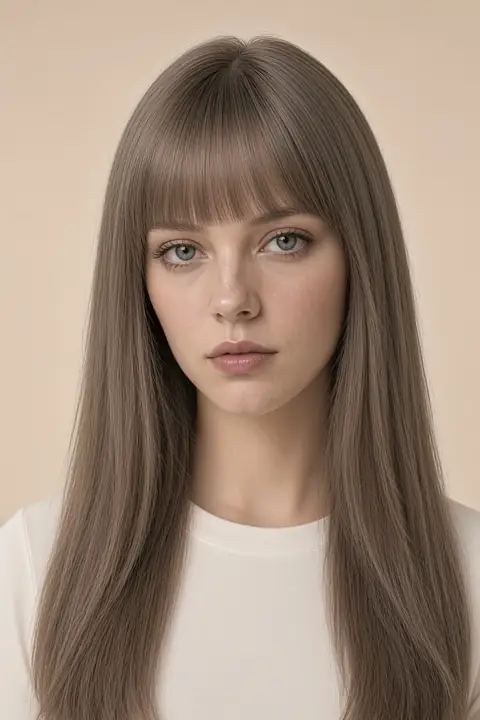
 Bangs filter
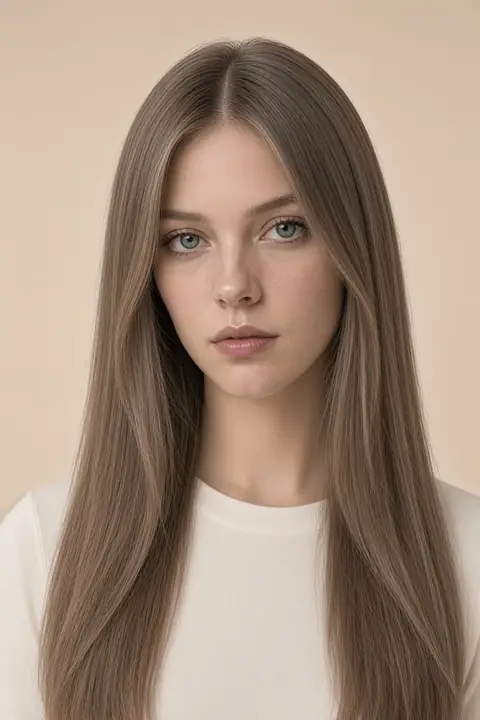 How would I look with long hair
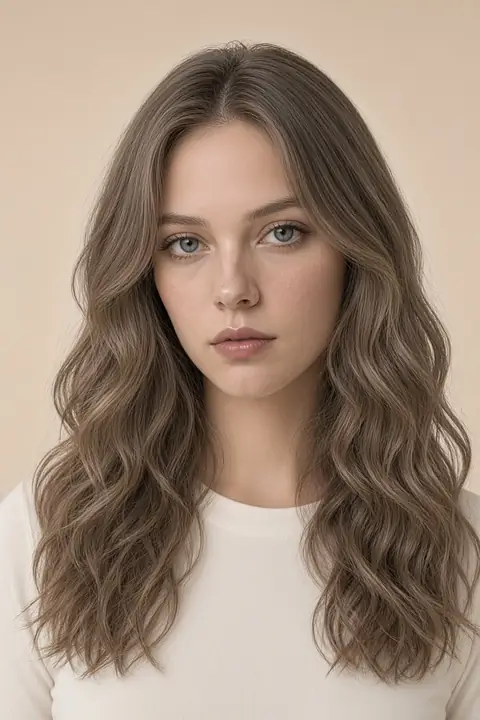 Curly hair filter
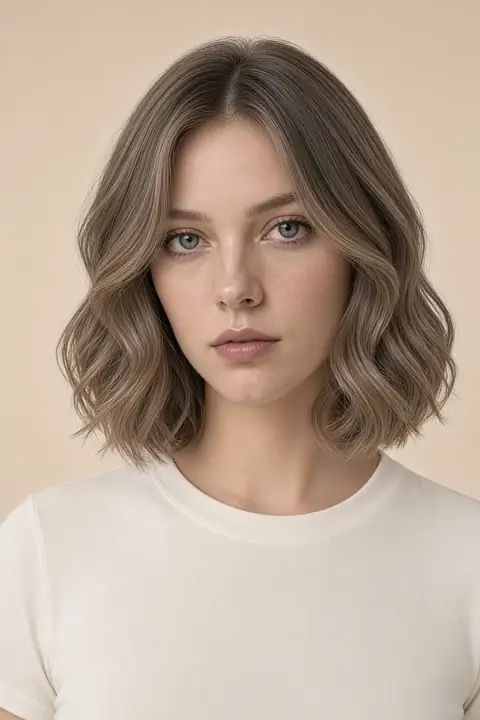 Perm filter
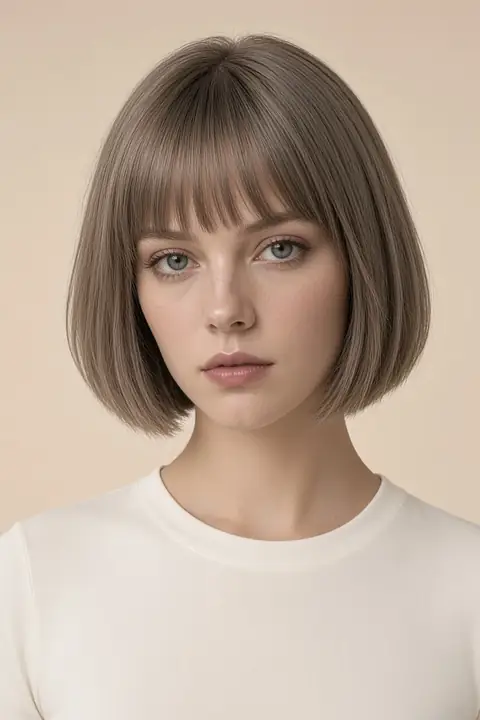
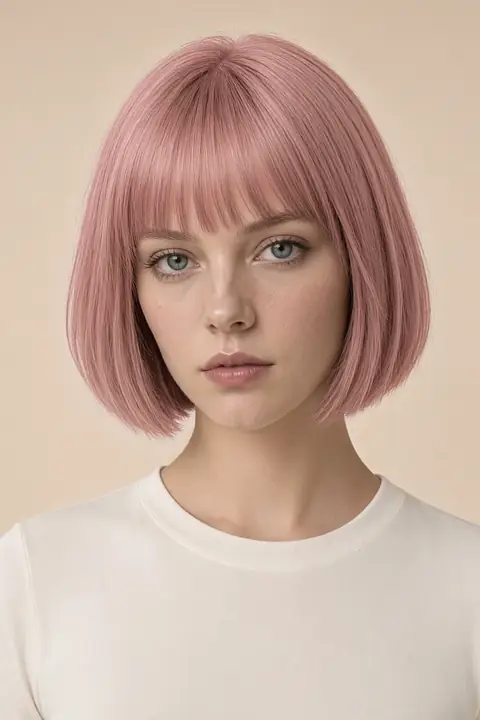
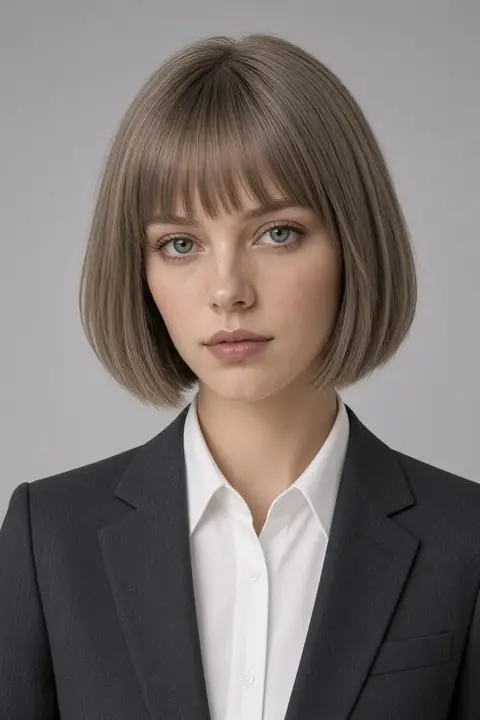
The edit on the photo you upload is a chin-length bob with straight blunt bangs. The ends sit near the jaw, not above the ears and not past the shoulders. It is not a clipper crop, it is not a buzz, and the head is not shaved. Ears may show at the sides. The bangs are part of this bob, on the same run as the hem. Bring an adult face, hair worn down, so the jaw and the forehead are both in the frame. Someone who wanted a scalp-showing crop is on the wrong card.
Look at the perimeter at the jaw, where a crop or a longer lob replaces the bob
Trace the hem before you name the cut. A bob on this card ends near the jaw on both sides, close to one length, with the nape no longer than that. Hair that stops above the ears and shows a lot of scalp is a crop. The buzz cut is the even clipper version. The pixie is short too, with a little length on top and the ears out, and it is not this bob. If the result is stubble or bare skin, the run missed the shape entirely. The bald filter is the smooth scalp. Do not keep a stubble photo as if it were a bob that happened to be short.
A hem at the collarbone is too long for this card. That length, blunt and without a fringe, is the lob. An angled line that is shorter at the nape and longer toward the chin, with no bangs, is the angled bob. Hair that still passes the shoulders was not cut to a bob. Layers that keep a long back are layers. This perimeter is the jaw. Both sides should land near the same height. One side at the ear and the other at the chest is an unfinished cut.
The hem should look cut. An edge that dissolves into the neck, with no line, means the length was blurred instead of cut. Density belongs to the hair you had, shortened, not to a thicker wig. Fine hair stays finer. A heavy cylindrical bob with no scalp at the part, on a head that was thin, is bulk added so the bob would read as full. The part you had can remain. A new razor-straight part painted down a bob that never had one is extra structure. Color stays unless you dye it later with hair color. A lighter bob is not what this card cuts.
Look at the fringe, where the bangs disappear or wipe out the brows
Straight blunt bangs sit across the forehead as part of this same cut. They are not a style you can turn off here. If the forehead is bare and the bob is the only change, the fringe was dropped. If you wanted a fringe on hair you mean to keep long, that is the bangs filter, which leaves the length you uploaded. This page cuts to the jaw and adds the bangs together. A bob with a bare forehead is a miss, even when the hem is right.
The brows remain visible. A solid band that covers them, or that covers both irises, is too heavy. The eyes stay readable under the fringe. The ends of the bangs should look blunt and cut, around the brow, not a see-through split and not a side-swept wing. Curtain bangs, parted in the middle, are the curtain bangs card. Pieces that fade into the bob with no end of their own are a bob without bangs, which is not this result either. The fringe should have a lower edge you can point at.
Frames that were in the upload stay. If the bangs erase the glasses or cross the lens, the face was rebuilt. Keep a file where the frame still sits on the nose you uploaded. A dark bar across the fringe is useful: it shows whether the hair actually ends, or whether it was smeared over the face. The eyebrows under that bar should still have their own shape, not a copy of the bang line.
Look at the ears and the sweater, where the short outline arrives with a new face
The ears are part of the outline. A chin-length bob often shows them. Showing them is not permission to redesign them. Compare folds, height, and earrings with the upload. An ear that slides down, or a lobe that appears from nothing, means the head was rebuilt around the hem. If one ear is hidden by the bob and the other is a new shape, trust the upload, not the prettier ear.
The jaw you see is more exposed, and it should still be your jaw. Width, chin, and the notch under the ear stay. A narrower jaw is not evidence about the bob. Eyes, nose, moles, and the mouth stay. A smoothing pass that erases skin texture while it cuts the hair is a changed face. Discard the shape if the person changed. The neck length should match too. A longer neck under a tidy bob is a common redraw, because the hem needs space to show.
Clothes and background stay. A sweater that becomes a salon cape, a neckline that opens, or a room that changes means the portrait was dressed for a haircut. A logo on the shirt should still read as the same logo, not a blur that arrived with the hem. You do not get the grow-out, the week the bangs feel too short, or the way the hem sits after a wash. A bun hides the length this cut removes, so the amount of hair gets guessed. A hat covers the fringe, which is half the result. Wear the hair down, forehead and jaw visible. What each control is called is covered in the bob help.
 Hair color
 Facial hair
 Face
 Photo privacy
 Headshots
 Clothes
 Enhance
 Background
 Remove