


 Goatee filter
 Beard filter
 No beard filter
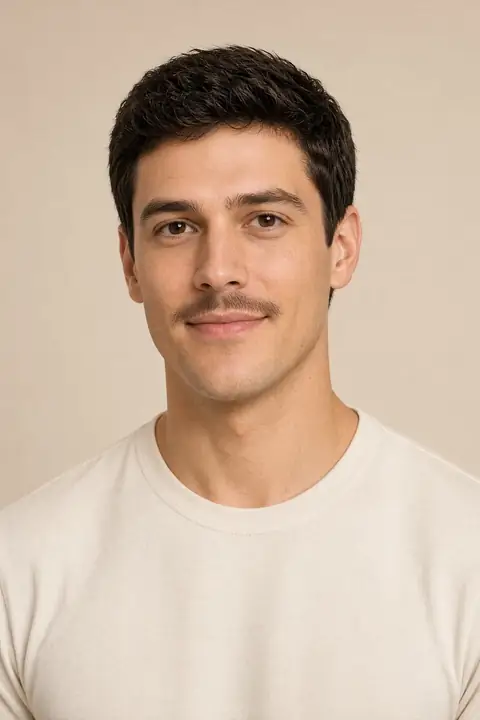 Mustache filter
The edit that produces a soul patch png from the photo you upload adds one small patch of hair under the lower lip. The cheeks stay bare. The jaw stays bare. The rest of the chin stays bare. A mustache is not included. The hair on the head stays the haircut you brought. Use an adult face you have the right to edit, photographed so the mouth and the chin are easy to see. Anything larger than that tuft is a miss, even if it looks like a style you have seen on someone else.
Look at the patch under the lower lip, where it spreads down the chin
The patch is small. It sits in the hollow under the lower lip, centered, and it stops well before the bottom of the chin. You should still see clean skin around it on the left, the right, and below. If the hair continues down the chin into a point, or wraps under the jaw, it has become a chin beard. A goatee puts hair on the chin and connects a mustache. A circle beard rings the mouth. An anchor pulls a mustache down toward a pointed chin. None of those is this patch. The tuft stands alone.
Shape is easy to overdraw. A believable soul patch is a short tuft, close to the skin, not a rectangle and not a long costume piece. A block with ruler edges, or a tuft that hangs off the chin, is the wrong shape. So is a shadow so faint you cannot tell it from a smudge on the lens. The patch should read as hair, with a little grain, in a color close to the hair on the head or to any stubble you already have. Bright black paint on a light beard area, or a blonde tuft with no relation to the photo, is a stamp.
The lip above it stays your lip. The patch should not swallow the lower lip, change its color, or move the corner of the mouth. If the smile, the teeth, or the lip line shifted to make room, the face was redrawn. A closed mouth and an open mouth are both usable sources. A new mouth is not. Compare the cupid's bow and the width of the lower lip with the upload before you accept the tuft.
Look at the cheeks and the upper lip, where a mustache or cheek hair cheats the bare skin
Cheeks are the test. They stay clean-shaven. Hair on the cheek, a sideburn that was not there, or a line along the jaw means the patch grew into a beard. A full beard covers jaw and cheeks on purpose. Stubble dusts the jaw and the upper lip. This card does neither. If the cheeks that were bare in the upload are speckled, reject the file. The bare cheek is the point. Without it, you cannot tell a soul patch from the start of a beard.
The upper lip stays bare too. The request does not add a mustache. A line of hair on the lip, a chevron, a curled handlebar, or even a faint shadow in the mustache area is extra. The patch does not connect to anything, because nothing else is there. A thin line joining the tuft to the lip is the start of a goatee. Stop at the patch. A van dyke separates a chin beard from a mustache and still covers more than this. If you can see hair in two places, this edit overshot.
Skin around the mouth should keep its texture. Pores, a scar, redness you recognize, the fold beside the nose: those stay. A smoothed oval of new skin with one perfect tuft in the middle is a painted face plus a sticker. The hairline of the head, the eyebrows, and the sideburns you already had should not move to balance the patch. Eyebrows are a common collateral change. They should stay the brows you uploaded.
Look at the jaw corners and the collar, where skin and cloth get redrawn
The corners of the jaw are bare, and they are still your corners. Width, the notch under the ear, and the chin's length stay. A sharper jaw or a longer chin, with a tiny patch as decoration, is a new face. Ears and eyes stay. Glasses stay. The patch is under the lip, so it has no reason to touch the eye, but a redraw of one feature often redraws the rest. Check the ear height. It has nothing to do with a tuft, which is why a moved ear is such a clear miss.
The haircut above the patch is not part of the edit. A new crew, a shaved side, or longer hair on the head means the hairstyle changed while the tuft was drawn. Keep a result where the head hair still matches the upload, including the hairline at the temple. Color of that hair stays. The patch can be a believable facial-hair color. It should not recolor the eyebrows or the scalp. If you want the scalp hair dyed, that is hair color, after the tuft looks right.
Clothes are the last check. A collar that rises to hide the bare jaw, a bow tie that appears, or a shirt that changes color means the portrait was restaged. The background stays the room in the file. You will not learn how the patch fills in over a week. You only see the small tuft on this photo. A hand over the mouth, a microphone, or a crop under the nose hides the only place the edit is allowed to work, so both the mouth and the patch get invented. Leave the chin visible, in light that shows skin. If this portrait should not be posted as-is, mask it with Face blur before you share it.
 Hairstyles
 Hair color
 Face
 Photo privacy
 Headshots
 Clothes
 Enhance
 Background
 Remove